Giving up both algae and the Pacific Ocean in favour of gestational diabetes
Line Hjort
Line Hjort had a dream of becoming a marine biologist, where she would discover new algae or nudibranch species around the Pacific Ocean. However, following courses in molecular biology and human physiology, she began a rethink. “I discovered how extremely fascinating it was to work in the area of cell biology, DNA and with genes in the laboratory”, she says. Algae have since had to make way for an overriding focus on metabolic disease and, in particular, gestational diabetes.
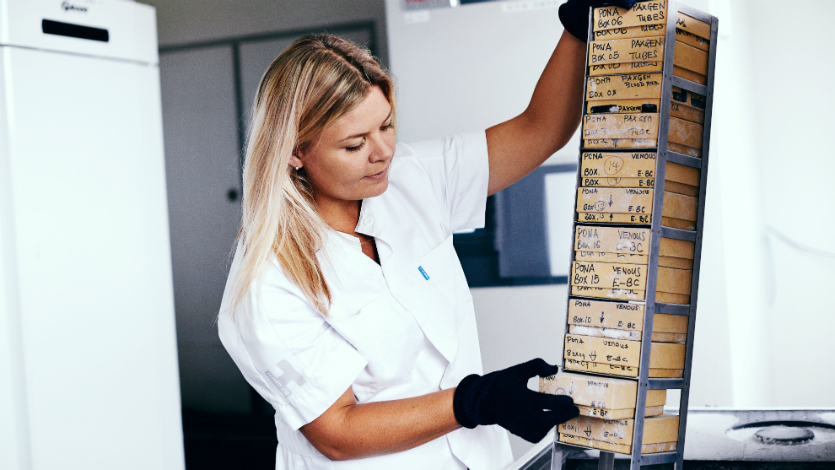
Line’s current work at Copenhagen University Hospital, Rigshospitalet, involves an investigation of the importance of the first nine months of life for the development—and prevention—of metabolic disorders such as type 2 Diabetes later in life.
Line, 31 years, might not have the Pacific Ocean as her workplace, but she will be seeing plenty of other locations in the world. Starting with Denmark, for example! In 2012-2014, Line travelled the length and breadth of the country conducting a study of 1,200 children and their mothers: this was in connection with a major project on diabetes in pregnancy, itself part of the Danish National Birth Cohort study. “It was an amazing experience,” she says.
Working in rural Tanzania
She is also part of a Danish government-funded study taking place in rural Tanzania. This study focuses on how anaemia in pregnancy might affect the developmental changes of these children, and her role in this study has been to plan how the epigenetic study and the protocols should be implemented locally in Tanzania where she has been teaching the local staff how to obtain placenta biopsies and cord blood samples.
After her PhD, she will work on this project as a postdoctoral fellow and—hopefully—she will we be able to discover how children can be given a better start in life by understanding what goes wrong during the first vulnerable early time period of life in the womb.
Striking it lucky
Line believes that she has been fortunate. During her PhD studies, she was granted the possibility to work eight months with Dr. Richard Saffery at Murdoch Children’s Research Institute, Melbourne, Australia. Dr. Saffery is one of the world’s leading epigenetics experts when it comes to understanding development in children and how epigenetics is involved in disease.
“Specifically, I learned how to bioinformatically analyze big data sets that are generated when we study genome-wide data—and this is something that I definitely can use in my future studies as postdoc”, she says.
Line struck it lucky for the first time when her supervisor Allan Vaag let her do her Master’s project in his research group first at Steno Diabetes Center and then later at Rigshospitalet as a research assistant and PhD student. “I have studied how gestational diabetes, more specifically how an adverse intrauterine environment, may affect the epigenome of the offspring, and if this can be a possible molecular mechanism behind future metabolic disease among these children. Besides the increased risk of diabetes development later in life among the mothers, several studies have shown that the offspring, too, are at increased risk of developing metabolic diseases. “I learned that the combination of both clinical research as well as molecular biology have great potential for translational research, and I’m greatly thankful for this chance to experience both working with the patients as well as with the samples in the lab”, she says and adds, “Actually, I do believe I’m the luckiest PhD student in the world.”
And algae and the Pacific have not gone by the board—they are subjects that she pursues in her free time.