

Under the wings of the Danish Diabetes Academy, Professor Bart Roep from the Leiden University Medical Center and Professor Karsten Buschard, Director of the Bartholin Institute at the University of Copenhagen will harness a longstanding interaction between their groups to join forces translating the concept originally conceived by Dr. Buschard that beta-cell rest alleviates their susceptibility to immune mediated destruction.

Associate Professor Anand A. Hardikar, University of Sydney, will be visiting Denmark on a Visiting Professorship funded by the Danish Diabetes Academy as a collaboration between Louise T. Dalgaard, Roskilde University and Jens H. Nielsen, University of Copenhagen. Anand will be in Denmark in February, May and August 2017 and January 2018.
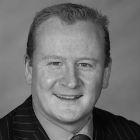
Dr Adam Farmer undertook his medical training at University College London, qualifying with the degrees of MB BS BSc (Hons) in 2001. He became a member of the Royal College of Physicians in 2004. Subsequently, he undertook his specialist training in gastroenterology and general medicine in the West Midlands before moving to the Wingate Institute of Neurogastroenterology, Barts and the Royal London School of Medicine, where he undertook a body of research funded by the Medical Research Council.
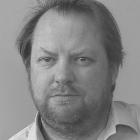
Professor Timothy Skinner will be coming to work at the Steno Diabetes Centre with the Diabetes Management Research group. Timothy was trained as a Health Psychologist in the UK, where he was responsible for the development of several diabetes self-management support programs for adolescents with T1D and adults with type 1 and type 2 diabetes. One of these programs, DESMOND, for individuals newly diagnosed with T2D is now delivered across the UK, and adapted versions delivered in Ireland, the Netherlands, Australia and New Zealand.
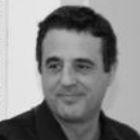
Unfortunately, the primary goal of human islets transplantation to treat type 1 diabetes, long term insulin independency, has not yet been reached due to limitations such as low survival and function of the transplanted islets and the shortage of organs to treat the desired number of patients. Untill other alternatives to islets are clearly defined, success, in the context of islet transplantation, is likely to come from strategies aimed at “making every islet count”.

Professor David McIntyre's visit to Denmark centres on the analysis of Danish and Australian data regarding elevated glucose levels in pregnancy and associated pregnancy complications. The ultimate aim is to both inform future clinical research and develop consensus based guidelines for the diagnosis and management of gestational diabetes mellitus (GDM) within the Danish health care system. This visit will allow him to gain a deeper understanding of Danish health care, to interact directly with a range of clinical and academic colleagues and to collaborate on data analyses.
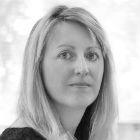
The purpose of my Visiting Professorship is to extend and develop novel collaborative research projects between Aarhus University, Steno Diabetes Centre and the University of Cambridge on the topic of screening and early treatment for type 2 diabetes. I will initially use the ADDITION-Denmark study as the basis for three related research projects, as well as developing novel research questions using different data sources.
Pages
